skip to main |
skip to sidebar
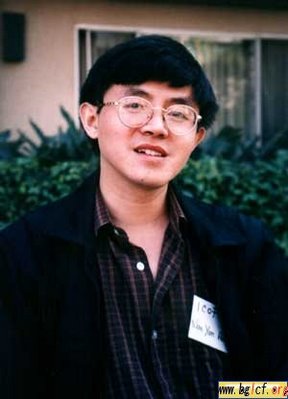 BEIJING - A prominent Chinese AIDS activist has gone missing after meeting with police, the activist's organization said Saturday, amid a suspected clampdown ahead of World AIDS Day.
Four police officers showed up at the Beijing offices of Aizhi, an AIDS advocacy group, on Friday morning and questioned Wan Yanhai for much of the day, the group said in a statement on its Web site.
Around noon, with police still present, Wan ordered colleagues to cancel a symposium on AIDS, blood safety and legal rights that had been scheduled for Sunday, the group's statement said.
Wan had not been heard from since he had a brief mobile phone conversation with a colleague Friday evening, the statement said.
"The colleague asked Wan Yanhai his whereabouts, and Wan Yanhai replied that he was being questioned. Since then, his colleagues and family have lost contact with Wan Yanhai," the group said. Wan's mobile phone has been switched off.
Wan has been one of China's most dogged campaigners for AIDS awareness and effective public health policies. He has frequently angered the Communist government, which had long ignored the spread of the disease. Wan has also drawn harassment from the police.
Although Beijing launched a more open and energetic fight against AIDS two years ago, Wan's apparent disappearance highlights the government's lingering antipathy toward outspoken activists.
The government acknowledges the spread of AIDS is accelerating. The Health Ministry reported days ago that over the first 10 months of this year the number of reported HIV and AIDS cases rose nearly 30 percent, to 183,733, from 144,089 at the end of last year.
Health experts say actual cases are likely to be four to five times the reported figure.
Though it was not immediately clear what prompted police to question Wan, initial signs pointed to the now-canceled symposium on Sunday.
Wan's colleagues at Aizhi said more than 60 people, some of them AIDS sufferers and their family members, had been invited to the symposium, one of the activities marking World AIDS Day on Dec. 1.
Twice on Friday while being questioned, Wan told his colleagues to be sure any participants who had come to Beijing from elsewhere returned home, the Aizhi statement said.
"Whether this is or isn't sensitive is not by our definition. It's theirs," said Wang Lixuan of Aizhi. A colleague, who refused to disclose her name, said the group held a similar symposium a year ago before AIDS day.
In a sign that organizers were aware of possible trouble, they did not publicize the symposium's location, but told participants to come to the Aizhi office for details.
The event's topics - blood supply safety and legal rights - touch on issues of government responsibility. Several localized AIDS epidemics in China were caused by tainted blood supplies and unsanitary transfusions, and victims have struggled to win compensation from the state health system.
In recent days, state media have reported on failed attempts for legal redress by farming families from an eastern Chinese village who contracted AIDS after selling blood in the mid-1990s.
The Tongshan County court refused this month to accept their lawsuit for compensation, citing pressure from higher-level officials, according to state media reports.
Such reports are emblematic of the government's turnabout on AIDS after treating the disease with silence and ineffective policies throughout the 1990s.
Wan has been a thorn in the government's side throughout. He was sacked from a Health Ministry job in 1994 after publicly calling for AIDS education and gay rights.
He founded the Aizhi group later that year, and has since been occasionally detained.
His publicizing of another epidemic from blood transfusions, in Henan province, landed him in detention for two months in 2002.
from The Associated Press
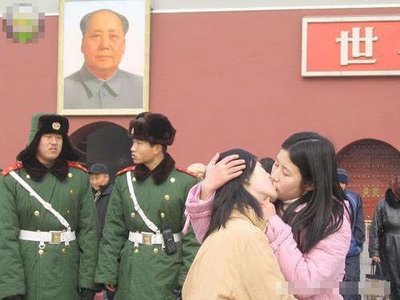 BEIJING - Homosexuality, often a taboo subject in China, has been in the headlines since a homosexual student group became a registered club at one of the country's prestigious universities.
The "Rainbow Group", which includes both homosexuals and heterosexuals, was named after the "Rainbow Flag", a symbol of the campaign for equal rights for homosexuals.
The group will study homosexuality and oppose sexual discrimination, according to Ai Xiaoming, the group tutor.
The group obtained registration permission from Zhongshan University in the country's southern Guangdong Province and became the first of its kind in the country.
Controversial sexologist Li Yinhe hailed it as "a landmark event" and "historical progress" on her blog.
"It's wonderful to see the Rainbow Group set up because it shows that a state university in China has given way to students with different sex orientation and is willing to hear their voice, " said professor Ai Xiaoming.
However, some students' parents are worried as they consider homosexuality a disgrace to their family.
"One boy's mother attempted to commit suicide when she discovered her 24-year-old son was gay," said Li Yinhe.
"If anyone in my daughter's university dares to give a lecture advocating new types of sexual relations and attacking traditional family values, I will sue the university," said Xue Yong, parent of a university student.
"I believe parents are just as worried about homosexuality as they are about sexual liberation," Xue continued.
In fact, homosexuality is no stranger to college students in China and nearly all big universities in China have homosexual forums on their websites.
In 2003, Peking University held the First Beijing Homosexual Film Festival. In 2005, Fudan University opened an optional course for undergraduates on homosexual research.
According to Li Yinhe's recent survey, 91 percent of Chinese respect homosexuals' choice of lifestyle, more than 80 percent hold that homosexuals deserve equal job opportunities and more than 60 percent do not object to having homosexual friends. The survey polled over 400 people in large and medium-sized cities in China.
Most people "accept homosexuals but hope they can change and become 'normal'", said the survey.
from China Daily
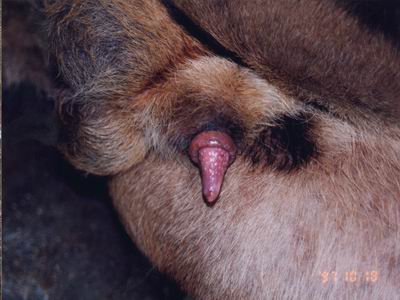 BEIJING, CHINA - There are many thousands of Chinese restaurants around in the UK and everyone has their favourite dish, but only in China itself do chefs specialise in a range of slightly more unusual delicacies.
The dish in front of me is grey and shiny.
"Russian dog," says my waitress Nancy.
"Big dog," I reply.
"Yes," she says. "Big dog's penis..."
We are in a cosy restaurant in a dark street in Beijing but my appetite seems to have gone for a stroll outside.
Nancy has brought out a whole selection of delicacies.
They are draped awkwardly across a huge platter, with a crocodile carved out of a carrot as the centrepiece.
Nestling beside the dog's penis are its clammy testicles, and beside that a giant salami-shaped object.
"Donkey," says Nancy. "Good for the skin..."
She guides me round the penis platter.
"Snake. Very potent. They have two penises each."
I did not know that.
Deer-blood cocktail
"Sheep... horse... ox... seal - excellent for the circulation."
She points to three dark, shrivelled lumps which look like liquorice allsorts - a special treat apparently - reindeer, from Manchuria.
The Guolizhuang restaurant claims to be China's only speciality penis emporium, and no, it is not a joke.
The atmosphere is more exotic spa than boozy night-out.
Nancy describes herself as a nutritionist.
"We don't call them waiters here. And we don't serve much alcohol," she says. "Only common people come here to get drunk and laugh."
But she does offer me a deer-blood and vodka cocktail, which I decide to skip.
Medicinal purposes
The restaurant's gristly menu was dreamt up by a man called Mr Guo.
He is 81 now and retired.
After fleeing China's civil war back in 1949, he moved to Taiwan, and then to Atlanta, Georgia, where he began to look deeper into traditional Chinese medicine, and experiment on the appendages of man's best friend.
Apparently, they are low in cholesterol and good, not just for boosting the male sex drive, but for treating all sorts of ailments.
Laughter trickles through the walls of our dining room.
"Government officials," says Nancy. "Two of them upstairs. They're having the penis hotpot."
Most of the restaurant's guests are either wealthy businessmen or government bureaucrats who, as Nancy puts it, have been brought here by people who want their help.
What better way to secure a contract than over a steaming penis fondue.
Discretion is assured as all the tables are in private rooms.
The glitziest one has gold dishes.
"Some like their food served raw," says Nancy, "like sushi. But we can cook it anyway you like."
Rare order
"Not long ago, a particularly rich real estate mogul came in with four friends. All men. Women don't come here so often, and they shouldn't eat testicles," says Nancy solemnly.
The men spent $5,700 (£3,000) on a particularly rare dish, something that needed to be ordered months in advance.
"Tiger penis," says Nancy.
The illegal trade in tiger parts is a big problem in China.
Campaigners say the species is being driven towards extinction because of its popularity as a source of traditional medicine.
I mention this, delicately, to Nancy, but she insists that all her tiger supplies come from animals that have died of old age.
"Anyway, we only have one or two orders a year," she says.
"So what does it taste like?" I ask.
"Oh, the same as all the others," she says blithely.
And does it have any particular potency? "No. People just like to order tiger to show off how much money they have."
Welcome to the People's Republic of China - tigers beware.
Sliced and pickled
"Oh yes," she adds, "the same group also ate an aborted reindeer foetus.
"That is very good for your skin. And here it is..."
Another "nutritionist" walks in bearing something small and red wrapped in cling film.
My appetite is heading for the airport.
Still, I think, it would be rude not to try something.
I am normally OK about this sort of thing. I have had fried cockroaches and sheep's eyes, so...
There is a small bowl of sliced and pickled ox penis on the table.
I pick up a piece with my chopsticks and start to chew. It is cold and bland and rubbery.
Nancy gives me a matronly smile.
"This one," she says, "should be eaten every day."
from The BBC
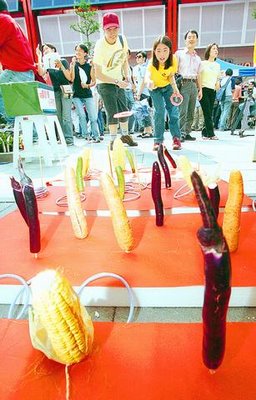 TAIPEI, CHINA - Taipei Mayor Ma Ying-jeou officiated at a ceremony yesterday marking the opening of Taipei's 2006 Lesbian, Gay, Bisexual and Transgender (LGBT) festival as well as the beginning of the city's LGBT civil rights movement.
Addressing the opening, Ma said it is hoped that by holding the festival, alternately titled the "LGBT Civil Rights Movement," Taipei will become a society that has peace, compassion and respect for all voices and cultures.
It is also hoped that Taipei will become bigger and greater by showing its commitment to multicultural tolerance, Ma added.
Ma announced the start of the annual Taipei LGBT civil rights movement by giving out a rainbow flag to participants after the ceremony was held in front of Taipei City Hall.
The rainbow flag was a gift from San Francisco Mayor Gavin Newson, who wrote to congratulate the city government for the Taipei LGBT Festival and work promoting human rights and in particular LGBT rights.
Newson has strived to promote the welfare of San Francisco's gay community since his election. His efforts have made San Francisco a strong example in the world in promoting gay marriage and rights.
With the involvement of city officials, San Francisco's LGBT movement is no longer based on an individual's quest for identity, but a collective effort on achieving true human rights and equal rights, said Chung Che-liang, commissioner of the city's Department of Civil Affairs.
With a similar aspiration toward becoming a world-class metropolis with a prosperous, multicultural atmosphere, the Taipei city government has a lot more to learn about its LGBT residents and their needs, Chung said.
Although Taipei has a long way to catch up, it is now the best city in all of Asia in terms of a LGBT rights movement and protection, Chung said.
The rainbow-flag-raising ceremony was followed by three different forums to map various aspects of Taipei's LGBT movement. All forums took place in the Taipei City Council's main assembly hall.
Taipei began to sponsor Taiwan's first LGBT Festival in 2000.
from The China Post
