skip to main |
skip to sidebar
 AUSTRALIA - Last year, ABC South East reported on the concerning phenomenon known as "cyclist's penis". The condition diminishes the erectile function and genital sensation of some men who spend too much time on the bike. New research has uncovered similar symptoms amongst female riders – though a suitable nickname is yet to be coined.
The man behind both these discoveries is Steve Schrader, who recently published his latest findings in the Journal of Sexual Medicine. Schrader says gynaecologists used lightly vibrating probes to stimulate the female genitals and participants measured the sensations they felt.
"Strange as it might sound, it's kind of like a hearing test," he says. "When you're doing a hearing test it's like 'Did I hear that? Did I not hear that?' This vibratory sensation is 'Did I feel something or not?'"
The study compared women who cycle with women who run for exercise instead. The findings for cycling women are just as worrying as in his earlier study of their male counterparts.
"It took more stimulus for them to fell the vibration compared to the women who were runners."
Like in men, Schrader says the problem is caused by the nose of the bike seat. The nose can allow a rider to place as much as 35 per cent of their body weight on a part of the body that carries blood and nerves to the genitals. That proved, in some, to be too much strain and pressure for a part of the body not built to bear weight.
"From what we know now, and this is the first real study that has looked at this, I would recommend a no-nose saddle."
Such seats are hard to come by - and Schrader says his research is funded by the United States Government, not a company pushing such a product. But he warns that seats with a cut-out or scoop in the middle are no substitute.
"The problem is that the cut-out aligns the pressure right where these blood-vessels are nerves are. There's data out of Europe that suggests that they put more pressure there than without a cut-out.
"No nose saddles take the pressure away from their completely."
from ABC Austraia

 Erectile dysfunction (ED) medications known as Phosphodiesterase type 5 (PDE-5) inhibitors have been used by millions of men as safe and effective management options associated with high rates of patient and partner satisfaction. Recent reports have appeared, however, that some individuals have misused this class of drug, combining them with narcotics such as methamphetamines. These reports further note that such individuals may be, in particular, at an increased risk for HIV. If such claims of a large and expanding use of PDE-5 inhibitors are correct, this would signify an important public health concern.
A comprehensive, multi-disciplinary conference funded by the National Institutes of Health sought to determine whether the drug class of PDE-5 inhibitors was contributing to an overall increase in HIV infection. The results of this conference appear in the latest issue of The Journal of Sexual Medicine.
Convincing evidence was not found to support the conclusion that PDE-5 inhibitor use is a risk factor for HIV infection. For the large majority of men, PDE-5 inhibitor use is conducted in a stable, committed partner relationship. Under such circumstances, the risk of HIV infection is relatively small. Clinicians and educators did emphasize, however, the importance of safe sex practices for those engaging in risky sexual relations.
"It's impressive how responsible most men are who use ED drugs, and the benefits they and their partners achieve with them, but there is a potential for abuse that needs to be recognized," says Raymond C. Rosen, PhD, lead author of the report. "I would not like to see Viagra, Cialis or Levitra being used as performance enhancement drugs--that's not why these drugs were approved or why physicians prescribe them."
Irwin Goldstein, Editor-in-Chief of The Journal of Sexual Medicine , noted that this paper is especially important to the field. "Health care providers should be reminded that individuals infected with HIV frequently have ED from their disease or from pharmacologic agents commonly used in its treatment. Positive clinical benefits have been reported in the HIV population when using PDE-5 inhibitor drugs as indicated."
from Medical News Today
 NOVO SANTO ANTONIO - The mayor of a small Brazilian town has begun handing out free Viagra, spicing up the sex lives of dozens of elderly men and their partners.
"Since we started the free distribution of sexual stimulants, our elderly population changed. They're much happier," said Joao de Souza Luz, the mayor of Novo Santo Antonio, a small town in the central state of Mato Grosso.
Souza Luz said 68 men over the age of 60 had already signed up for the program, which was approved by the town's legislature and has been dubbed "Happy Penis," or "Pinto Alegre" in Portuguese.
But the program has also had the unforeseen consequence of encouraging some extra-marital affairs, Souza Luz said.
"Some of the old men aren't seeking out their wives. They've got romances on the side," he said.
To discourage such illicit canoodling, Souza Luz said the city had decided to begin distributing the Viagra pills to the wives of the men who signed up for the program.
"That way, when the women are in the mood, they can give the pills to their husbands," he said.
from The Hindustan Times
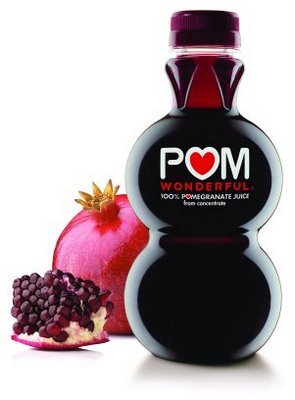 Drink it. Eat it. Slather it all over your body.
There is no denying that the pomegranate, its fleshy burgundy bulb packed with juicy seeds, is one of the trendiest, most versatile fruits on the market.
In the past seven months, 215 new pomegranate food and beverage products were introduced in the United States, according to Tom Vierhile, director of Datamonitor's Productscan Online, which keeps track of new products. Last year, 258 new pomegranate products were introduced, up from 19 in 2002.
Why such a boom in popularity now? For centuries, the sweet but tart fruit has left its deep crimson splash just about everywhere — in Greek mythology, Christianity, Judaism, Islam, Buddhism, Hinduism. But for today's consumer, the pomegranate has entered mainstream culture through more secular but equally worshipped outlets: Oprah, Rachael Ray, the Starbucks Frappuccino. And for good reason, according to health experts.
"It's just now that we are finding the modern evidences and proofs of its health effects. ... It has been used for medicinal purposes for ages," says Navindra Seeram, assistant director of the UCLA Center for Human Nutrition and lead co-editor of "Pomegranates: Ancient Roots to Modern Medicine," published recently.
Here are a few reasons — according to research conducted by Seeram and colleagues at the University of California, Los Angeles — the fruit is good for you:
• Packed with antioxidants (even more than you'll find in cranberries, red wine and green tea), pomegranates can help prevent the onset of atherosclerosis, a hardening of the arteries that leads to heart disease and stroke.
Unlike most fruit juices, drinking a commercial juice such as POM Wonderful is more healthful than eating the fruit itself because 70 percent of the antioxidants found in the juice are released from the peel when the pomegranate is squeezed, according to Seeram.
• A study released by UCLA in June indicates drinking a glass of pomegranate juice every day can help slow the spread of prostate cancer, allowing diagnosed men to live longer.
• Menopausal and post-menopausal symptoms, including hot flashes, can be alleviated by the phytoestrogen found in the pomegranate seed. It's the only plant known to contain estrogen.
advertising
• A natural Viagra? Another recent study, which measured the erectile function of rabbits, showed a regular intake of pomegranate juice raises nitric oxide levels and blood supply as seen in those who take Viagra.
Companies are capitalizing on the fruit's ever-growing appeal, with products ranging from chewing gum called Pomegranate Power by Ford Gum & Machine Co. to a pomegranate chicken sausage ($6 a pound) made by Jody Maroni's Sausage Kingdom, a California-based franchise.
Split open the tough skin of a pomegranate, and you'll find hundreds of seeds bulging between webs of white membrane.
"People like the exotic nature of the product," Vierhile says. "People are becoming more adventurous in their eating and drinking habits, and pomegranates allow them to do that."
Products other than the popular POM Wonderful juice ($4, 16 ounces) include POM Tea ($2.99, 13.5 ounces); IZZE Sparkling Pomegranate Fruit Juice ($1.59, 12 ounces); Litehouse Pomegranate Blueberry Vinaigrette Dressing ($3.99); and Hauser Chocolatier Pomegranate Truffles ($12.75 for nine pieces), filled with pomegranate ganache and garnished with dried seeds.
During the Oscars, countless celebrities could be found sipping Red Carpet Martinis (vodka, Grand Marnier and pomegranate juice, garnished with a gold leaf) at the Four Seasons Hotel Los Angeles in Beverly Hills.
Some new pomegranate alcohols include PAMA Pomegranate Liquor, a mix of tequila and vodka, and Hiram Walker's Pomegranate Schnapps.
The fruit is also a popular antioxidant additive in beauty products.
"People have no aversion to slathering it on their body," says David Klass, co-president of Archipelago, which came out with its Pomegranate Collection in April. Products in the line include body butter, sugar body scrub, dry oil body spray and body polish, to name a few.
"It's probably the most successful thing we have ever done," he says.
Other beauty products include Miso Pretty Pomegranate Lip Gloss from Blue Q ($11.95); Pomegranate Conditioning Hair Rinse by Fresh ($24); Borba Fiber-Knit Lotion SPF 15 ($25); Whish Mini Shave Crave Pomegranate Shaving Cream ($32 for three jars); and Dr. Brandt AntiOxidant Pomegranate Water Booster, 30 drops of which contain as much antioxidant power as 15 cups of green tea ($35 for a 2 ounce bottle).
"You are seeing one of the latest trends out there," says Vierhile. "There's a certain cool factor to knowing about these things."
from The Seattle Times
 AUSTRALIA - Last year, ABC South East reported on the concerning phenomenon known as "cyclist's penis". The condition diminishes the erectile function and genital sensation of some men who spend too much time on the bike. New research has uncovered similar symptoms amongst female riders – though a suitable nickname is yet to be coined.