Showing posts with label Sexual Orientation. Show all posts

Tuesday, September 18, 2007

Gay Or Straight? Body Type And Motion Reveals Sexual Orientation

Gay
An individual's body motion and body type can offer subtle cues about their sexual orientation, but casual observers seem better able to read those cues in gay men than in lesbians, according to a new study in the Journal of Personality and Social Psychology.
"We already know that men and women are built differently and walk differently from each other and that casual observers use this information as clues in making a range of social judgments," said lead author Kerri Johnson, UCLA assistant professor of communication studies. "Now we've found that casual observers can use gait and body shape to judge whether a stranger is gay or straight with a small but perceptible amount of accuracy."
Johnson and colleagues at New York University and Texas A&M measured the hips, waists and shoulders of eight male and eight female volunteers, half of whom were gay and half straight. The volunteers then walked on a treadmill for two minutes as a three-dimensional motion-capture system similar to those used by the movie industry to create animated figures from living models made measurements of the their motions, allowing researchers to track the precise amount of shoulder swagger and hip sway in their gaits.
Based on these measurements, the researchers determined that the gay subjects tended to have more gender-incongruent body types than their straight counterparts (hourglass figures for men, tubular bodies for women) and body motions (hip-swaying for men, shoulder-swaggering for women) than their straight counterparts.
In addition, 112 undergraduate observers were shown videos of the backsides of the volunteers as they walked at various speeds on the treadmill. The observers were able to determine the volunteers' sexual orientation with an overall rate of accuracy that exceeded chance, even though they could not see the volunteers' faces or the details of their clothing. Interestingly, the casual observers were much more accurate in judging the orientation of males than females; they correctly categorized the sexual orientation of men with more than 60 percent accuracy, but their categorization of women did not exceeded chance.
The findings build on recent research that shows that casual observers can often correctly identify sexual orientation with very limited information. A 1999 Harvard study, for example, found that just by looking at the photographs of seated strangers, college undergraduates were able to judge sexual orientation accurately 55 percent of the time.
"Studies like ours are raising questions about the value of the military's 'don't ask, don't tell' policy," Johnson said. "If casual observers can determine sexual orientation with minimal information, then the value in concealing this information certainly appears questionable. Given that we all appear to be able to deduce this information to some degree with just a glance, more comprehensive policies may be required to protect gays against discrimination based on their sexual orientation."
The findings also are part of mounting evidence suggesting that sexual orientation may actually be what social scientists call a "master status category," or a defining characteristic that observers cannot help but notice and which has been scientifically shown to color all subsequent social dealings with others.
"Once you know a person's sexual orientation, the fact has consequences for all subsequent interactions, and our findings suggest that this category of information can be deduced from subtle clues in body movement," Johnson said.
from Science Daily

Monday, February 26, 2007

UCLA Gets $1 Million To Study Legal Topics Involving Gay Couples

Gay
LOS ANGELES - A gay couple who hope to marry one day has donated more than $1 million to the University of California, Los Angeles, to fund research on legal topics involving same-sex relationships.
The gift announced Friday from John McDonald and Rob Wright will support what is described as the nation's first endowed academic chair in sexual orientation law.
The two say they want to promote objective research, but they also hope to aid the campaign for gay marriage and other gay rights issues.
"This is going to support legal scholarship, legal research and education that covers a whole area so fundamental to creating change," said McDonald, 74, a former chief executive of a medical and hospital management firm.
McDonald and Wright, 58, who worked in advertising and real estate, have lived together for almost 25 years and are registered as domestic partners. The two live in West Hollywood and Colorado.
Some universities have chairs in gay and gender studies, but they're usually in the humanities and social sciences and not in a law school.
A member of UCLA's law faculty is expected to be picked for the chair in three to six months.
from The Mercury News

Wednesday, January 17, 2007

Top Law Firm Sued For Sexual Orientation Discrimination

Gay Office
MANHATTAN
- A mergers and acquisitions associate at Sullivan & Cromwell has sued the firm alleging a pattern of discrimination against him on the basis of sexual orientation.
In a pro se complaint filed Tuesday in Manhattan Supreme Court, Aaron B. Charney accuses several of the firm's top partners of discriminating against him because he is gay. He also claims the firm initiated a retaliatory campaign after he filed an internal complaint, culminating in the issuance of a fabricated performance review.
In a statement e-mailed Tuesday to all Sullivan & Cromwell lawyers, chairman H. Rodgin Cohen said the firm categorically denied Charney's allegations. He said the associate had made similar claims in May 2006, at which time he engaged a lawyer to demand a multi-million-dollar payment from the firm. The firm had investigated Charney's claims then, said Cohen, and rejected the demand for payment.
"Sullivan & Cromwell is widely recognized as welcoming to all persons without regard to sexual orientation," Cohen concluded. "We are proud of our record of hiring and advancement of individuals irrespective of their sexual orientation, as well as of our lawyers' representation of organizations and individuals who protect the rights of individuals to be free from sexual orientation discrimination."
Cohen declined further comment Tuesday.
In an interview Tuesday, Charney, a fourth-year associate, said he is representing himself because his lawyer had feared the "far-reaching tentacles" of Sullivan & Cromwell, one of the city's most profitable and prestigious firms. Charney denied demanding a payment though he said his lawyer at the time did attempt to negotiate settlement terms with the firm. The complaint he filed Tuesday does not specify damages.
Charney, 28, also said he did not mean to suggest in his suit that all lawyers at the firm were bigoted. Indeed, the suit describes a number of associates and one partner in particular as being sympathetic to Charney's complaints. But he said Tuesday he believed discriminatory attitudes were perhaps more common in the M&A group in which he worked.
Gay Office"It's a macho culture that allows people to feel they can get away with these things," said Charney, a 2003 graduate of Columbia Law School.
He claims partner Eric M. Krautheimer most directly expressed hostility toward him as a gay man, on one occasion allegedly throwing a document at the associate's feet and making a disparaging comment about physical positions common in homosexual sex. The next day, Krautheimer allegedly made another disparaging remark about gay sex.
But most of the allegations in the suit do not describe acts of outright hostility but constant insinuations by partners that Charney was involved in a relationship with another associate, Gera Grinberg.
Charney says in his suit that Grinberg is not gay and the two never had a relationship, but he said several partners clearly believed otherwise. He said James C. Morphy, the M&A group head, told him at his semi-annual review in November 2005 that other partners had complained about seeing Grinberg and Charney eating lunch together and walking together. Morphy allegedly told Charney that "this needs to stop."
Benjamin F. Stapleton, a member of Sullivan & Cromwell's management committee, also allegedly complained in a widely circulated document that the two associates worked together "too closely." Partner Alexandra D. Korry allegedly told another associate she thought Grinberg and Charney were engaged in an "unnatural relationship."
Charney claims he made an oral complaint in May 2006 to David B. Harms, the co-head of the firm's general practice, of which M&A is a subgroup. Harms allegedly took little action but assured Charney he would not face retaliation for complaining about discrimination.
But Charney claims Korry asked Harms to fire him, and also had his name deleted from a list of lawyers to be publicly mentioned as having worked on a major deal, the 2006 sale of most of the assets of bankrupt Adelphia Communications. Charney claims retaliation was also the reason he was dropped from a summer associate mentoring program run by Keith Pagnani.
Charney also accuses an openly gay M&A partner, John J. O'Brien, of participating in the alleged retaliation by trying to have the associate assigned to a matter with him. The suit claims O'Brien was trying to "delegitimize" Charney's discrimination claims and provide Sullivan & Cromwell with a potential defense.
Gay OfficeCharney claims one partner took his side. M&A partner Stephen M. Kotran allegedly defended both Charney and Grinberg on a number of occasions and allegedly urged Harms to investigate Charney's claims more fully. Kotran, who did not return a call for comment Tuesday, also allegedly warned Charney that the firm was retaliating against him over his complaint to Harms.
The suit claims the alleged retaliation campaign culminated in a July 2006 performance review given by Morphy and labor and employment partner Theodore O. Rogers. In that review, the two partners allegedly criticized work performed by Charney on a deal led by Kotran and on which Grinberg was also staffed. The review called the two associates an "M&A group management problem" and said they "run up too many hours when working together."
According to Charney, Kotran again stood up for him and disavowed the review by Morphy and Rogers. He claims Kotran wrote a second review to be submitted to Charney's personnel file, praising both him and Grinberg as "outstanding" associates whose work had pleased the client. Kotran also allegedly thereafter praised the two associates to a number of clients.
Charney, who was out of the office Tuesday but had been planning to return later in the week, said Tuesday he had been contacted by Rogers, who told him he was barred from the office pending further investigation. He said the firm also turned off his Blackberry and disabled his access to the firm's Web site.
The firm has previously been represented by Theodore Wells of Paul, Weiss, Rifkind, Wharton & Garrison.
Charney said Tuesday he fully expected to be facing a similarly high-powered opponent, but he said he was confident in his case, much of which he claimed is contained in documents and in voice recordings.
"They could bring in 50 lawyers and I'll just sit there," he said, "because I'll have the truth."
from Law.com

Thursday, January 11, 2007

Board of Education Approves New Sex-Ed Curriculum

Gay
The Montgomery County Board of Education approved new sex-education lessons yesterday for the eighth and 10th grades that teach what it means to be homosexual but say little about how people become gay, resisting pressure from a divided community to define homosexuality as nature or nurture, right or wrong.
Approved by a unanimous vote, the lessons mark the first time Montgomery schools will introduce the topics of sexual orientation and homosexuality. The materials, including a new 10th-grade condom-demonstration DVD, will be field-tested in a handful of middle and high schools in spring, barring intervention by the courts.
Some school board members said they expect a lawsuit from the same community groups that persuaded a federal judge to halt a version of the curriculum in spring 2005. U.S. District Judge Alexander Williams Jr. found that the curriculum presented one view of homosexuality, "that homosexuality is a natural and morally correct lifestyle," to the exclusion of all others.
"I believe we will be sued. That's okay. . . . Bring it on," said board member Sharon W. Cox (At Large).
Leaders of the protest groups said yesterday that they would consider their legal options and signaled that they have the same objection to the new curriculum as to the old one: They say it offers one viewpoint, favorable toward homosexuality, anal sex and premarital sex. Observers on both sides have predicted that "viewpoint neutrality," or lack thereof, would eventually form the basis of a lawsuit.
"Absolutely nothing is allowed to be said that is negative about homosexuality," said Ruth Jacobs, an infectious-disease specialist and member of Citizens for a Responsible Curriculum, which, with Parents and Friends of Ex-Gays and Gays, sued to block the curriculum in its first incarnation.
Gay
Defenders of the previous curriculum hailed the new one, which explores the range of sexual orientations and gender identities, defines harassment and discrimination and teaches tolerance regardless of sexual orientation. Board of Education President Nancy Navarro applauded the group's 8 to 0 vote, which, in the face of potential litigation, "sends a message that we stand firm on the balanced approach that we have taken with these revisions."
About 15 opponents of the curriculum appeared at the board meeting, carrying signs that read, "Children's health before political agendas" and "Not viewpoint neutral."
The opposition groups say that if lessons on sexual orientation are taught at all, they should include perspectives that homosexuals can change, that transgenderism is a mental disorder and that anal intercourse is dangerous. One representative from each of the two opposing groups sat on a 15-person advisory committee that recommended dozens of additions and changes to the curriculum.
Others on the committee lobbied the school board to insert stronger statements in the curriculum in support of gay, lesbian and transgender students. Yesterday, that campaign narrowed to a request that a single sentence be added to the lessons, instructing that mainstream medical and mental health organizations have concluded that homosexuality is not a disease or a mental illness.
The suggestion divided board members, who split 4 to 4 on a motion by Patricia O'Neill (Bethesda-Chevy Chase) to instruct teachers to provide the statement upon a student's request.
School Superintendent Jerry D. Weast reminded board members that the curriculum, written by his staff, had been built on specific academic objectives and tailored to "circumscribe our liability."
from The Washington Post / Daniel de Vise

Wednesday, November 15, 2006

3 Christian Groups Move To Condemn Gay Sex

Gay CoupleFaced with rising public acceptance of same-sex relationships, three U.S. Christian denominations are taking strong measures this week to condemn homosexual acts as sinful.
The nation's Roman Catholic bishops, meeting in Baltimore, declared Tuesday that Catholics who minister to gays must firmly adhere to the church's teaching that same-sex attractions are "disordered." Catholics with "a homosexual inclination" should be encouraged to live in chastity and discouraged from making "general public announcements" about their sexual orientation, the bishops said.
The largest Baptist group in North Carolina, meanwhile, moved to expel any congregation that condones homosexuality, adopting a policy that allows the Baptist State Convention to investigate complaints that member churches are too "gay-friendly."
And on Wednesday in Pittsburgh, the Presbyterian Church (U.S.A.), a mainline Protestant denomination with about 3 million members, will put a minister on trial for conducting a marriage ceremony for two women.
The decisions are part of a mounting backlash in many U.S. denominations against church groups whose stated goal is not only to welcome but also to "affirm" gay congregants. For many religious groups, the biblical injunction to hate the sin but love the sinner is no longer sufficient, because many believers do not view homosexuality as a sin.
The impulse to restate traditional teachings against same-sex activity is complicated by the simultaneous desire to minister to gays. Thus, Bishop Arthur J. Serratelli of Paterson, N.J., chairman of the U.S. Conference of Catholic Bishops' committee on doctrine, stressed that the tone of the bishops' statement was intended to be "positive, pastoral and welcoming," even as it compared same-sex attractions to the temptations of "envy, malice or greed."
Asked how he could square those two messages, Serratelli told reporters that "the truth is always welcoming."
The bishops' statement came in the form of new guidelines for Catholic ministries aimed at gay men and lesbians. Bishops must take care, it says, "to ensure that those carrying out the ministry of the Church not use their position of leadership to advocate positions or behaviors not in keeping with the teachings of the Church."
It is not sufficient, the document adds, for those ministering to gays to take a position of "distant neutrality" toward the church's teachings.
Donald W. Wuerl, Washington's new archbishop, said the document should not be seen as a crackdown on pro-gay ministries. Rather, he said, "the starting point is the church living in a culture in which these things are being promoted, and our task is to keep saying: 'Remember, here are the true teachings of the church.' "
Serratelli, summarizing the document, said the church considers same-sex attractions to be "objectively disordered" because "they do not accord with the natural purpose of sexuality." Although "simply experiencing a homosexual inclination is not in itself a sin," he said, homosexual acts are "sinful," "never morally acceptable" and "do not lead to true human happiness."
A coalition of 15 Catholic groups that support the full inclusion of gays in the church, including Call to Action and DignityUSA, denounced the document as "not at all pastoral, but rather harmful."
"These guidelines try to make gay and lesbian people invisible in the church. The plan here is not to minister but to make a 'problem' disappear," said Francis DeBernardo, executive director of New Ways Ministry, a Catholic outreach group for gays.
In North Carolina, the state Baptist Convention voted to broaden its fight against homosexuality by moving to expel churches that "affirm," "approve," or "bless" same-sex relationships.
The measure targets as many as a dozen Baptist churches in the state that position themselves as actively welcoming gays, but it could exclude any church that enrolls openly gay members.
The growing acceptance of gays in popular culture and the fact that homosexuality has powerful advocacy groups made the stance necessary, Baptist leaders said.
"In our day and time, no other sin marches so defiantly across our national landscape," Mark Harris, the head of the committee that introduced the measure, told the 2,600 delegates, or "messengers," assembled at a convention hall in Greensboro, N.C.
But while the proposal was approved by the required two-thirds majority, hundreds held up their hands to object. Some worried that churches would spy and report on one another. Others said the measure impinged on local church autonomy and reflected an unfounded obsession with homosexuality.
"It seems so contrary, at least to me, to the picture and posture of Jesus in the gospels," Nathan Parrish, from a church in Winston-Salem, N.C., told the assembly. "Jesus's life and ministry were marked by radical hospitality, openness, vulnerability, humility. By contrast, the Baptist State Convention is recommending that we . . . magnify the message that certain types of people, as well as their friends and perhaps their fellow believers and family members, are neither welcome nor worthy of a place at the table of this community."
What made the measure extraordinary, church members on both sides said, is that for what may be the first time in the convention's 176-year history, membership in the group would be contingent upon a specific policy -- that is, treatment of gays.
"This issue has emerged as a litmus test," said Andrew Wakefield, professor of biblical studies at Campbell University, in Buies Creek, N.C., which is affiliated with the Baptist State Convention.
On Wednesday in Pittsburgh, the Rev. Janet Edwards will go on trial before a Presbyterian Church tribunal for officiating at a same-sex marriage ceremony. Earlier this year, the Redwoods Presbytery in Northern California acquitted a minister in a similar trial, ruling that ceremonies for same-sex couples are not "contrary to the essentials of the Reformed faith."
Jimmy Creech, who was defrocked as a United Methodist minister in 1999 for performing a marriage ceremony for two men, said the number of U.S. churches that welcome openly gay members has been rising steadily, including many congregations in the Methodist Church, the Episcopal Church and the United Church of Christ.
"But it's a social change that, for many, has theological implications they just are not willing to accept," he said.
from The Washihngton Post / Alan Copperman & Peter Whorisky

Monday, November 13, 2006

Bishops May Alter Language On Gays

GayWhile continuing to stress that same-sex relationships are immoral, America's Roman Catholic bishops may approve new guidelines this week that absolve gay Catholics of any obligation to try to alter their sexual orientation.
The guidelines for ministering to homosexuals, to be reviewed when bishops convene Monday in Baltimore for their annual fall meeting, also will urge clergy to baptize the adopted children of gay couples who agree to raise them Catholic.
"We are trying to find a language that does not betray the teaching of the church, but will perhaps express it in ways that are not so offensive," Chicago's Cardinal Francis George, vice president of the U.S. Conference of Catholic Bishops, said in an interview last week.
"The conclusions are the same," George said. "The language will be less painful than sometimes the language has been in the past."
The bishops also plan to remind parishioners how to prepare themselves for Communion, laying a foundation that would make it easier for clergy to deny the sacrament to Catholics at odds with the church, including politicians.
The issue surfaced during the 2004 presidential campaign when some bishops threatened to deny Communion to Sen. John Kerry, a Catholic who supports abortion rights.
"That started a conversation that wasn't resolved, but brought up this other thing--worthiness to receive Communion on everybody's part," George said. "It shouldn't be automatic. There's personal scrutiny and examination of conscience that should take place."
Missing from the meeting's agenda is any mention of the war in Iraq, an absence that irks parishioners who believe the bishops should focus on that issue rather than homosexuality.
"We hate to see our moral teachers squandering their moral teaching authority when there are important issues they should be dealing with--poverty and social justice and the war," said Sam Sinnett, president of Dignity USA, the nation's largest gay Catholic organization.
"They're much more concerned with whether two homosexuals are going to get married or not," he said. "They've lost focus on the needs of the human race."
Opposition expected
The documents on ministering to gay people, drafted by conference committees, could encounter opposition from some conservative bishops. Recent Vatican directives bar most gay men from pursuing ordination and prohibit priests with "homosexual tendencies" from teaching or running seminaries.
Since issuing those injunctions, Pope Benedict XVI has implied a connection between homosexuality and the clergy sex abuse scandal, declaring a need to "purify" the church.
This won't be the first time bishops have addressed the issue of gay Catholics. A pastoral letter drafted in 1997 counseled parents to love their gay sons and daughters and encourage them to live a chaste life.
Though the letter did not stray from church teaching, its advice stirred too much controversy and did not pass. The current guidelines try to balance doctrinal language that condemns homosexual relationships with inclusive pastoral language.
"You can't have pastoral care without it being founded on theological moral principles," said Rev. Thomas Weinandy, executive director for the conference's doctrinal committee. "You have to have principles on which you base pastoral care."
Sinnett said the document certainly does not sit well with gay Catholics who find its tone unwelcoming. He also said he was dismayed to learn that bishops had been working on it for four years without consulting the nation's largest gay Catholic group.
On Sunday, Dignity USA issued its own update of pastoral guidelines the group had issued in 1987 in response to a condemnation of homosexual relationships issued by Cardinal Joseph Ratzinger, who is now pope.
Weinandy said bishops steered clear of input from advocacy groups to "avoid the appearance of taking sides."
Guidelines praised
Rev. Tom Reese, a Jesuit scholar who wrote a book on America's bishops, praised the new document for carefully distinguishing between homosexual activity and orientation, leaving the debates about origins to science and not insisting that gay Catholics take part in therapy.
"No scientific consensus has been reached regarding the effectiveness of various therapies," the document says. "Thus, the church does not endorse one particular theory of the genesis of homosexuality or one particular therapy over another. ... Some have found therapy helpful. There is, however, no moral obligation to attempt it."
The document on Communion does not directly address Catholic politicians or instruct bishops, but it does define what makes a person unworthy for communion. "Inevitably," George said, "that will be translated into a political framework."
If someone "publicly known to have committed serious sin or to have rejected definitive Church teaching" takes Communion without reconciling, the document says, it would encourage others to follow their lead and engage in sinful behavior. That means a politician who violates church teaching by voting in support of abortion rights would lead to further violations, Weinandy said.
Stephen Colecchi, director of the conference's office of international justice and peace, said bishops might take up the issue of withdrawal from Iraq even if it is not on the schedule. In January, bishops called for a responsible transition in Iraq and last month implored Secretary of State Condoleezza Rice to protect Iraqi Christians and other religious minorities.
"Although the bishops had raised grave moral questions about the decision to go to war, the U.S. has a new set of responsibilities ... to help Iraqis stabilize their country," Colecchi said. "The human and moral consequences of what is happening certainly mean the bishops will take that into account."
Other business at the meeting includes the creation of a uniform hymnal for the American church. The bishops also are expected to channel funds toward a landmark study on the causes and context of the clergy sex-abuse crisis. The first phase of the study will explore whether clergy sex abuse corresponds with overall social patterns of deviant behavior during the last half-century. If the patterns differ, investigators will look into "ministry-specific factors."
George said bishops expect to generate the most comprehensive data in the nation on the issue and hope to garner additional financial support from outside sources for the multimillion-dollar study.
from The Chicago Tribune

Tuesday, October 31, 2006

LGBT Military Personnel Cautioned About Online Use

Gay MilitaryWASHINGTON - Amidst new reports that the armed forces are increasing their surveillance of online usage by military personnel, Servicemembers Legal Defense Network (SLDN) today cautioned service members to be especially careful when using the internet or posting information online.
According to the Associated Press, military officials are now monitoring "official and unofficial blogs and other Web sites" and looking at websites military personnel may visit. "Now soldiers wishing to blog while deployed are required to register their sites with their commanding officers, who monitor the sites quarterly, according to a four-page document of guidelines published in April 2005 by Multi-National Corps-Iraq," the AP said.
"The military's stepped up surveillance of online activity also means an increasing risk to lesbian, gay, bisexual and transgender service members who use online communities," said Kathi S. Westcott, deputy director of law for SLDN. "Service members must be especially cautious about posting any information online which reveals their sexual orientation. While online communities can be an important communication tool for military personnel, they can also lead to investigations and dismissals under 'Don't Ask, Don't Tell.'"
SLDN has posted guidelines for LGBT military personnel using online communities at http://www.sldn.org. In addition, AP reports that service members who maintain blogs must now "register their sites with their commanding officers, who monitor the sites quarterly." Any information related to sexual orientation on a service member's private blog, SLDN cautioned, would be grounds for dismissal from the armed forces. from Press Release

Monday, October 30, 2006

Gay Is Okay, But Homosexual Is More Accurate

GayATLANTA, GEORGIA - It has long been the editorial policy of Atlanta Progressive News to use the word “homosexual” to describe persons who have a same-sex sexual orientation.
Our policy differs from that of many news organizations which tend to prefer the word “gay” instead of “homosexual.”
I want our readers to know that as a News Editor, I have put a lot of thought into this and many other word choices at Atlanta Progressive News.
After receiving two emails from concerned readers, I have revisited and explored the issue again, and have come to the same conclusion: it would be irresponsible of APN as a news agency to use the words “gay,” “straight,” or “lesbian” as if any of these were unproblematic.
What is in a word?
Language isn’t perfect, of course, because it is socially constructed. So we can’t focus on language and unlock the mysteries of the universe.
But, we can look to language to uncover some very fascinating issues about ourselves. And I think it’s important we think about the significance of the language choices we use, and what ideas they may perpetuate.
Some people have objected to the use of “homosexual” because it calls attention to sexual orientation.
Well, any time you’re using an adjective to describe someone’s sexual orientation, I’m sorry, but you’re calling attention to their sexual orientation. Using the word “gay” doesn’t make it any different.
We might want to discuss, where does it get us as a society to even categorize people into sexual orientations? Maybe it’s nobody’s business what another person’s sexual orientation is. But that’s not something that will be settled any time soon.
In the meantime, as long as people feel the need to use an adjective describing a person’s sexual orientation, then we should try, I believe, to use the most accurate word possible.
There is no word, in my view, which more accurately describes same-sex sexual orientation than the word homosexual.
Now, there are a number of reasons some people have been enthusiastic about the word “gay.” And I want to talk about these reasons.
Most of the reasons I’ve gotten, I must say, have not been very compelling. The word “homosexual” is antiquated; no one uses it anymore, I’ve been told. Well, I’d prefer to be principled than to follow trends.
But a few substantive reasons have been put forth.
First, the word “gay,” I’ve been told, is preferred because it doesn’t call as much attention to sexuality as does the word “homosexual.”
Well, I think that’s exactly the problem!
I think the propagation of the word “gay” is an effort to appease the Religious Right in this country.
It’s almost like, don’t worry, we’re not homosexual, we’re just gay. See? And that’s not as bad now, is it? We’re just happy and festive [the original meaning of “gay”] and we’re good, wholesome people, and have a wonderful community, and oh, by the way, we also have same sex sexual orientation but that’s really neither here not there.
It makes me feel like people are still so ashamed of their sexual orientation that they don’t want to admit it.
Moreover, I don’t think using the word “gay” instead of “homosexual” advances the cause of equality.
In fact, I think it makes it worse by insidiously allowing the Religious Right to define the word “homosexual” word as such a taboo, to the point where some of us would be offended by its very usage!
I think we should embrace the word homosexual, and we should be working diligently to turn it into a wonderful, positive word... instead of surrendering its meaning to our enemies.
One Atlanta blogger, Chris Vise, gave another argument, and told us:“Sure being gay is having a sexual attraction to a person of the same gender [sic; should have said “sex,” not gender] but that isn't all there is to being gay.”
GayReally? What else is there?
Let’s be clear. I’m not saying homosexual people are wholly “defined” as people by their sexuality, than 23 year-old people are defined by their age, or blue eyed people are defined by their eye color.
But, when you’re using an adjective to describe a demographic characteristic about a person, then yes, you are calling attention to whatever trait it is.
If homosexual people don’t like being called “homosexual” because it brings attention to their sexuality, then using the word “gay” shouldn’t help the situation, really, since it’s supposedly doing the same thing.
Chris Vise’s claim I think gets to the crux of the matter.
Is there really more to being “gay” than being homosexual?
Here is where I think we hit a loaded question.
Because I don’t think there is.
I mean, maybe a lot of homosexual people, say, in Atlanta, read Southern Voice Magazine every week, and go to Gay Pride, and buy their books at Charis and Outwrite.
The key word in that sentence is “a lot.” “A lot” is not the same as “all.”
To assume there is a cluster of cultural activities and attributes that accompany every homosexual person is, I believe, unfair.
The only thing all homosexual people have in common is their homosexuality.
Now, what about “the gay community?”
There are some really interesting questions here: Is there a gay community? Who is a member of the gay community? Who gets to decide the boundaries of the gay community? Who is the gatekeeper? Who gets to decide what the community should be called?
And, clearly, there is evidence of a “gay community” in that there are a lot of homosexual people and prominent organizations who participate in the “gay community,” and prefer the word “gay.” And the fact that it’s real to them is enough to make it real for our discussion.
However, who gets to decide whether “gay” is the right name for a community which purports to include all homosexuals?
Of course, it isn’t just the “gay” community. The community has typically been expanded to include many other populations.
Debates over whether it should be lgbt, lgbtqi community, or another acronym, highlight the very constructed nature of what we’re talking about.
Was there a vote on whether “gay” is the right word for the entire population of homosexual people in America? Did all homosexuals get a ballot? I certainly, as a homosexual, did not receive a ballot. So do me a favor and don’t call me gay unless you’re describing my happiness.
Why the word "gay"?
It's almost like, "gay" people are just so happy and fun and fabulous that they can't help themselves, and this gay-ness just carries over into their sexual life.
As if, the word "gay" is juxtaposed to "rational" or "moral."
The worst thing about it is when “gay” is juxtaposed to “straight!”
Think about it. Everyone knows in the cultural slang, the opposite of “gay” is “straight.” So the meaning of each word is intrinsically defined by its opposite.
I think that's the ultimate self-betrayal, when we use the word straight to describe heterosexuals!
Does this mean “gay” people are crooked?
The history of the word "straight" didn't always mean heterosexual; it used to mean not on drugs, or "on the straight and narrow," the opposite of hippies during that era. So, again, I think there’s an undertone to the word “gay” that means morally inferior!
So, what now? Do we use the word “gay” or “homosexual?”
People can continue to do whatever they want, really. But as a newspaper, I think APN has a responsibility not just to satisfy the vocal majority, but to protect the silent minority of people who may not be happy with the word “gay.”
Given the problems with the word “gay” as I’ve described, homosexual is a far superior choice, especially since, by definition, it most accurately describes the characteristic we’re talking about.
Most importantly, equality based on sexual orientation is a key element of our progressive editorial principles at Atlanta Progressive News. Such equality will continue to be important to our mission even if some readers disagree with us over some labels.
We hope this explanation of our policy has raised some interesting questions, and we certainly apologize if anyone was offended.
from The Atlanta Progressive News / Matthew Cardinale

Saturday, October 28, 2006

Gay Pastor Feels Compelled To Give Up Post

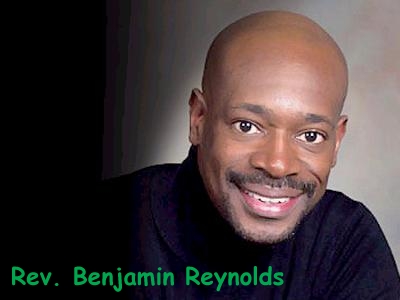
Rev. Benjamin ReynoldsCOLORADO SPRINGS, COLORADO - The Rev. Benjamin Reynolds, senior pastor of Emmanuel Missionary Baptist Church and one of Colorado Springs’ leading civil rights advocates, will step away from the pulpit Sunday, a few weeks after telling his congregation he is gay.
Reynolds, a longtime advocate for gay and lesbian rights, revealed his sexual identity during a church meeting last month. He announced his resignation during the same meeting.
“It’s not really a happy leaving,” Reynolds said Thursday.
According to Deacon Kevin Hagans, Emmanuel’s director of operations, many church congregants feel that homosexuality runs counter to the Christian doctrines.
“The church and Pastor Reynolds have a different view as far as homosexuality goes,” Hagans said.
The 500-member church has not named a successor, Hagans said.
Reynolds, 45, grew up in Emmanuel Baptist and started preaching there when he was 14. He’s been the church’s senior pastor for nearly 16 years. Reynolds was president of the local chapter of the National Association for the Advancement of Colored People for more than two years, stepping down from that post in 2005.
But Reynolds’ stance on gay issues — including making Emmanuel Baptist an “open and affirming” congregation for gays and lesbians — rubbed many of his congregants the wrong way, he said. That friction, not his sexual orientation, is what caused him to resign, he said.
Reynolds said it would have been difficult for him to remain once he revealed that he was gay, however.
“I think the black church has a long way to go in this area,” he said. “The oppressed, when they feel a place where they’re free, they’ll find others who they’ll oppress.”
Reynolds said part of the reason why he told his congregants he was gay was to personalize the pressing theological, social and political issues that revolve around sexuality.
He said he knows he’s “considered an outcast now,” but added that members of Emmanuel Baptist have been “as supportive as they can be.”
Reynolds said he doubts he’ll stay in Colorado Springs and plans to take doctoratelevel theology classes, possibly at the Iliff School of Theology in Denver. He says he has a “pastor’s heart,” and would like to return to a pulpit.
“I’ve not lost sight of my faith,” he said.
from The Gazette

Tuesday, October 17, 2006

Supreme Court Turns Away Scouts Appeal

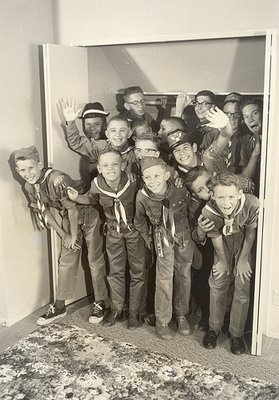
Boy Scouts In The ClosetWASHINGTON - In a setback for the Boy Scouts, the Supreme Court turned away a free-speech challenge to a Berkeley policy that denies city-subsidized dock space to a Scouting group because it excludes gays and atheists.
The court's action lets stand rulings in California and elsewhere that have said cities, schools and colleges may deny public benefits to groups that refuse to comply with broad nondiscrimination rules involving religion and sex orientation.
Some conservative groups had joined the challenge to the Berkeley policy, saying that advocates of "traditional moral values" are being subjected to discrimination across the country by "politically correct" government officials.
The court's action sets no legal precedent, however, and the justices could well take up the issue in the future.
Six years ago, the high court came to the aid of the Boy Scouts of America when it ruled that a state cannot force a private group, such as the Scouts, to include openly gay men if doing so would violate its professed code of conduct. In that case, James Dale, a former scoutmaster, had sued the group after he was excluded upon acknowledging he was gay.
The New Jersey courts said the Scouts must abide by the state's anti-discrimination law.
The Supreme Court disagreed in a 5-4 decision in the case of Boys Scouts vs. Dale.
But in the wake of the Scouts' victory, some cities and school districts refused to permit Scouting groups to use their facilities on the same basis as they allowed other nonprofit organizations.
Lawyers for the Scouts then went back to court to challenge this exclusion as unconstitutional discrimination. So far, however, they have been rebuffed.
Harold Johnson, an attorney for the Pacific Legal Foundation, which presented the appeal, said he was disappointed the court refused to hear the case.
"We are confident that, eventually, the court will take a case addressing the underlying issues, because there are too many examples of government discrimination against Scouting and other belief-based organizations to ignore," he said in a statement.
For many years, Berkeley had given a rent-free berth in its marina to nonprofit community service organizations, including the Sea Scouts. An affiliate of the Boy Scouts, the group teaches sailing and seamanship to teenagers.
But the Berkeley City Council adopted a new policy that required groups that wanted a free berth to agree in writing that they would not discriminate against persons based on, among other factors, their race, religion, ethnicity or sexual orientation. The Scouts did not sign the agreement because Boy Scouts policy excludes gays and atheists.
Eugene Evans, an adult leader of the Sea Scouts, agreed to pay $500 a month to maintain the berth in the Berkeley marina, but he also led a lawsuit that challenged the policy as violating the group's rights to freedom of speech and the equal protection of the laws. He argued the Scouts were being treated as "second-class citizens" because their views on religion and homosexuality were disfavored by the government.
He lost decisively in the California courts.
In March, the California Supreme Court upheld Berkeley's policy in a unanimous ruling. "Berkeley had not attempted to muzzle anyone's speech," said the state high court. "A government entity may constitutionally require a recipient of funding or subsidy to provide written, unambiguous assurances of compliance with a generally applicable nondiscrimination policy."
The Scouts hoped for a more sympathetic hearing from the Supreme Court. The Pacific Legal Foundation, which is based in Sacramento, said the California ruling "sets an ominous precedent" for Scouting groups. Former Atty. Gen. Edwin M. Meese III, U.S. Rep. Dan Lungren (R-Gold River) and other conservative lawyers backed the appeal and noted that some Christian groups have been denied recognition or funding on college campuses because they too exclude gays and atheists.
"Millions of Americans who believe in traditional moral and religious values are looking to this court to uphold the constitutional rights and equal treatment under the law," they said in a friend-of-the-court brief.
But in a one-line order, the court refused to hear the case of Evans vs. City of Berkeley.
Lawyers for Berkeley had argued that since Evans had appealed on his own, he did not truly speak for the Sea Scouts. Although the justices gave no explanation for refusing to hear the case, this could have figured in the decision.
from The Los Angeles Times