Sunday, September 25, 2005

Portia De Rossi Nixed Nude Lesbian Scene With Angelina Jolie

Portia De RossieAngelina JolieArrested Development star Portia De Rossi has reportedly revealed that she nixed a nude lesbian scene in a movie with puffy lipped superstar Angelina Jolie. The movie was the 1998 film Gia, and the film was based on the life of fashion model Gia Marie Carangi.
One scene in the film shows Jolie and actress Elizabeth Mitchell (who apparently took the role) completely nude while taking photos and doing a still talked about "lesbian scene" through a chain link fence.
There are other scenes as well that place the two actresses together in nude embraces.
Apparently, those scenes frightened De Rossi. Portia reportedly says she turned that down because she feared she'd have to `come out' as a lesbian.
The striking blonde beauty was reportedly intent of hiding her sex secret when the offer of a gay sex scene with Jolie, who has often come clean about her bisexuality, came along.

from The National Ledger

Woman Attacked At Gay Pride

Johannesburg Gay PrideAn 18-year-old woman is in Johannesburg Hospital after she was pierced in the neck by a broken bottle during the gay and lesbian pride march in Johannesburg on Saturday evening.
The woman, who was on the Forum for the Empowerment of Women (FEW) float in the 16th gay and lesbian pride march, was admitted to hospital in a critical condition.
The bottle was thrown at her from a block of highrise flats in Harrison Street. "She is still alive, but with trauma patients, their condition can change quickly," a spokesperson at Johannesburg Hospital told Sapa on Sunday morning.
"The kind of society we live in does not allow us to say too much. Someone could find her and come and shoot her."
FEW spokesperson Zanele Muholi confirmed that the woman, from Mohlakeng near Randfontein, had been "stitched up".
Muholi said the hate attack was an indication of intolerance and homophobia.
"In peoples' minds we still have to march like this in hidden places, but we are part and parcel of the same community," Muholi said.
"What has happened is an indication that we still have a long way to go in South Africa."
Muholi said the woman had attended FEW workshops in the week leading up to the march, including a workshop on hate crimes against lesbians.
"These young women come from the townships, like Orange Farm, and think they will be safe in the city, because in the townships they know they might be raped for being a lesbian.
"How do you explain to your family, friends that you were hurt at Pride, in town?" Muholi said they had not traced the person who threw the bottle.
March organiser Paul Tilley commended the fast action of the metro emergency services, but he described the attack as "very unfortunate".Johannesburg Gay Pride
"The fact is we were marching as gays and lesbians to celebrate our constitutional rights."
He said march organisers and the Metro police would have to meet to discuss how a similar or worse incident could be avoided next year.
Carrie Shelver, of People Opposed to Women Abuse said that in 2000, there were up to 10 rape and assault cases opened by women attacked after the march.
She said one of the sangomas on the FEW float was attacked on leaving the march. "She was held at gunpoint and a man tried to strangle her."
Emergency services spokesperson Steven Kirk and metro police spokesperson Chief Superintendent Wayne Minnaar could not confirm the incident.
from News24.com


Saturday, September 24, 2005

Gay Books Celebrate Banned Book Week

I Know Why the Caged Bird SingsMirroring the heated debate over gay marriage, three of the 10 most challenged books in the nation last year were cited for homosexual themes - the highest number in a decade, according to the American Library Association.
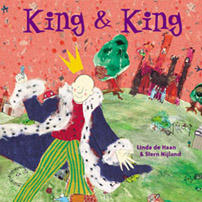
The three books include a picture book titled King and King by Linda de Haan and Stern Nijland, a young adult novel titled The Perks of Being a Wallflower by Stephen Chbosky, and I Know Why the Caged Bird Sings, an autobiographical volume by poet Maya Angelou.
These books and others will be spotlighted this week as libraries, bookstores, and schools around the country celebrate the 23rd annual Banned Books Week, which begins today and runs through next Saturday.
Concern about homosexual themes in books also has sparked efforts - so far unsuccessful - in several state legislatures to eliminate funding for materials that deal with homosexuality, ALA officials said.
In addition, Rep. Walter Jones (D., N.C.) has introduced legislation requiring local school districts to create parent councils to review proposed acquisitions of materials for classrooms and libraries. Mr. Jones developed his legislation after hearing complaints about King and King.
Similarly, complaints about King and King prompted the Metropolitan Library System in Oklahoma City to move children's books containing "sensitive or controversial" material to a special collection available only to adults.
American Library Association officials said they are battling these efforts as contrary to intellectual freedom.
"It all comes down to the imposition of your views on other people. To be honest, it seems to me to be downright un-American," said Michael Gorman, head of the library association.
He said the library association believes parents are responsible for what their children read.
"But it's important that the general public understand that there are people who want to censor the reading of other people's children," he added.
The annual Banned Books Week celebration, highlighting the most challenged books of the previous year, is one way the library association attempts to fight back, officials said.
Overall, the number of book challenges reported to the ALA's Office for Intellectual Freedom last year jumped by nearly 100, from 458 in 2003 to 547 in 2004, officials said. That is less than the 762 challenges recorded in the peak year of 1995, but still a worrisome trend, they added.
King & King
A book challenge, as defined by the library association, is a formal written complaint filed with a library or school requesting that materials be removed because of content or appropriateness. Sexual themes and offensive language are among the most common reasons cited.
The majority of challenges involve school libraries, but the number involving public libraries is increasing, library association officials said.
"These are just the challenges that we've heard of," Mr. Gorman added. "It's estimated that there are probably four to five times as many that we don't hear about. It's so hackneyed, but the phrase 'tip of the iceberg' comes to mind."
Except for King and King, all of the titles on the list are in the collection of the Toledo-Lucas County Public Library system.
Library Director Clyde Scoles said none of the books has been the subject of any complaints he knows about and that, in general, book complaints have been rare in Toledo
Library staff rely on parents to monitor the age-appropriateness of books their children check out, Mr. Scoles said, noting that parental or guardian signatures are required for a minor to receive a library card.
Those on the other side of the fight contend that the library association is failing to protect children from materials that are pornographic and violent.
"The ALA is an organization that pushes smutty books into K-12 schools, effectively using taxpayer money to do so," members of a Virginia-based group called People Against Bad Books in Schools, wrote in an e-mail response to a reporter's query.
"The ALA is focused on promoting their agenda in which anything goes at any age. Banned Books Week is simply one way they use to do that."
Pat Scales, a school librarian in South Carolina and author of Teaching Banned Books, said the Internet has helped fuel the growth of groups which are challenging books.
"It's become a huge Internet movement," said Ms. Scales, who has testified as an expert witness in several cases around the country involving book challenges. "On the flip side of that, because these people have been so aggressive and so active on the Internet, that has also mobilized those who feel differently."
Groups challenging homosexual themes in books have pushed their case in three states in recent months. The groups attempted to persuade lawmakers in Alabama, Louisiana, and Oklahoma to pass legislation eliminating state funding for materials that deal with homosexuality or materials that have been written by homosexuals.
The Perks of Being a WallflowerThose efforts were rejected, although the Oklahoma House passed a nonbinding resolution urging library officials to restrict children's access to books with homosexual themes, library association officials said.
Recently, Metropolitan Library System in Oklahoma City voted to move some books containing "sensitive or controversial" themes to a collection available only to "adults in authority.".
Mr. Jones, the GOP North Carolina congressman, said empowering parents was the goal of his legislation to require local school districts to create parental boards to review library and classroom-based materials before they are purchased for elementary schools.
"This legislation will be one avenue to help parents to take back their right to determine the appropriateness of the content their children are exposed to," Mr. Jones said.
But library officials say such legislation would enable a minority of parents to control content used by all students.
"There's not a public school out there that doesn't have a mission statement that says it serves all students," Ms. Scales said. "That means all ethnic groups, those who are gay or straight; it means everything.
"There are people who want their kids to read books about gays and lesbians. Therefore we have an obligation to have those books. We select those books the same way we select all others - based on their literary merit.
from ToledoBlade.com

Judy Shepard Speaks Out About Laramie Cancellation

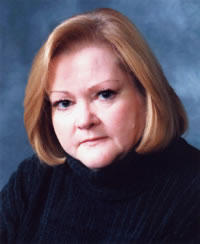
Judy ShepardWhen she was first told why her son had died, that the kids who kicked and punched him to death did so because he was gay, it didn't make it worse for Judy Shepard. When a mother gets a phone call saying her child is barely alive in a hospital, pummelled beyond recognition, she's already at the extreme end of confusion and grief. Additional details, no matter how upsetting, can't make her pain any more excruciating. But after you've buried that child, after you've cried for 40 days and 40 nights, the circumstances that robbed you of him suddenly do matter. And for Judy Shepard at least, those circumstances were almost as heartbreaking as her son's death itself.
"No one should ever die because they are gay," Ms. Shepard says today. "Hate crimes against people for reasons of race, religion, sexual preference are a continuing problem in our society and I believe the way we can eventually eradicate them, or begin to, is through education.

"Hate is a learned behaviour."

And acceptance, she believes, can be one too.
Not surprisingly, Ms. Shepard, an American who speaks to audiences across the United States about the death of her son and the need for a more tolerant society, was disappointed to learn that school board officials in the Vancouver suburb of Surrey recently cancelled a planned high-school production of a play entitled The Laramie Project.
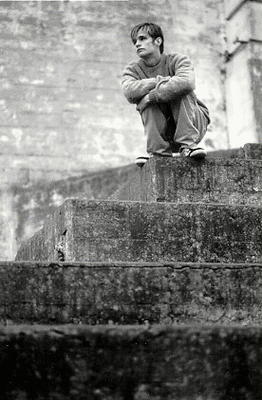
The play is about how townsfolk in Laramie, Wyo., reacted to the news of a gay university student who, in 1998, was lured from a local bar by two young men who beat him badly, tied him to a fence post, and left him for dead. The victim died five days later in hospital.
The real-life crime on which the play is based garnered international attention and made Laramie an unintended battleground in the bitter, continuing debate in the United States between anti-gay activists and gay-rights supporters.
In cancelling The Laramie Project at Surrey's Elgin Park Secondary School, the school board took the position that the play's subject matter was not appropriate as family entertainment. School productions are often performed before parents and young children. The board said the play included profanity and references to sex and violence and therefore was not suitable for everyone.

The decision prompted the expected outcry.
Gay-rights groups suggested the move amounted to censorship and homophobia. They were quick to point out the Surrey school district's history of "homophobic" decisions, including the banning of three books depicting same-sex parents from use in kindergarten.
Laramie Project playwright Moises Kaufman, meanwhile, expressed his own outrage in an interview with a Vancouver newspaper. He, too, called the decision homophobic, and said the play had been performed on high school stages across the United States.
The B.C. Civil Liberties Association also called on the Surrey board to reverse its decision: "Homophobia is one of the most pressing human-rights issues we have in our schools today. . . . Acting precipitously [to ban the play] leaves school administrators open to allegations of bias and intolerance."
The association said that the play does not contain sexuality and that the only violence is a description of the young man's death. Elgin Park drama teacher Stan Engstrom, who was not consulted by the board before it made its decision in the middle of auditions, said he was prepared to tone down some of the profane language.
By the end of the week, the school board was saying it would be prepared to allow the play to go ahead, with alterations, but only for viewing by students in Grades 11 and 12.
I think the board's decision was wrong. Concern about some swear words? Kids hear all the swear words they want today on the playground, radio, TV, Internet, you name it. Even family newspapers print swear words today if it's felt they add context (that is, are important) to the story.
Doug Strachan, speaking on behalf of the board, told me that the play's overriding message of tolerance is taught in the classroom. True, but Mr. Strachan also knows that message would be delivered far more forcefully on a stage, and that's the crucial thing.
The impact.
I think the vital nature of the play's content, in this case, overrides the usual concerns about appropriateness. Why not stage the play with a warning to parents: "Content may be offensive to some and may not be suitable for children of all ages." Let the parents decide if they want their children, of whatever age, to view it.
Ms. Shepard agrees. She has seen the play several times.Matthew Shepard
It might make some uncomfortable, she admits, but think of the discomfort of those who are daily targets of the kind of hateful attitudes that lead to hateful crimes.
"Hate is really out there and alive and thriving in our world," she said. "It is learned from fear and ignorance. We can learn to be more tolerant and if I didn't believe that I wouldn't be out here preaching the word."
She says her son's death has given her the voice she speaks with today. He is with her every day. She talks to him about decisions she has to make. Some days Judy Shepard can think about him and smile, some days she can think about him and not stop crying. She never knows how it's going to be.
Ms. Shepard launched her pro-tolerance crusade on behalf of her son, to honour Matthew in a way. And as trite as it may sound to some, she says she's doing it so others don't have to go through what she and her husband, Dennis, did seven years ago next month.
She hopes the Surrey school board sees the light and allows the play to be staged.
"The Laramie Project is a wonderful play with an important and powerful message," she says. "It wasn't the easiest thing for me to watch, either. It's about my son's death, after all."
from GlobeAndMail.com


Friday, September 23, 2005

Japanese Men Find Their Feminine Side

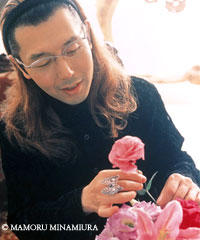
GardeningTAKAMATSU, Japan -- A rose by any other name is still a rose, but in the hands of Shogo Kariyazaki -- the celebrity florist who has bloomed into one of Japan's richest men -- a rose is as good as gold.
One part Liberace, one part Martha Stewart, Japan's gender-blending home guru was greeted this week by a standing-room-only crowd in this sleepy western town. With glossy lips, flowing bleached-blond hair and a black silk shirt embroidered with birds of paradise in flight, the slight 46-year-old exclaimed, "Beauty is the essential thing in life!" He then tossed yellow roses and pansies into a vase as his audience offered enthusiastic "oohs" and "aahs."
An estimated 20,000 locals -- one in every 15 residents of Takamatsu -- paid $5 each to view his "fantasy forest exhibition" of day-glo trees and heart-shaped anthuriums at the city's largest department store. Kariyazaki is so popular through his TV appearances, live shows and corporate sponsorships that he ranked as one of the country's biggest individual taxpayers last year, earning 10 times the average salary of Toyota's top executives, according to Japan's National Tax Agency.
Kariyazaki's fame mirrors rapidly changing norms in the land of the samurai. Gender roles have been undergoing a redefinition in recent years as women enter the workforce as never before and men embrace less confining views of masculinity.
The so-called feminization of Japanese men has become a topic of TV talk shows, magazine articles, academic research, films and, perhaps most notably, public acceptance. When Prime Minister Junichiro Koizumi, a divorced father of three, requested a dance with Richard Gere during a meeting this year, no one blinked an eye -- even when Koizumi had Gere lead their waltz.
"There's no question that men are changing the way they think of themselves in Japan. Even salarymen are interested in beauty and looking their best -- either for their girlfriends or just for themselves," said Kariyazaki, referring to the country's male office workers. "It doesn't matter if they are straight or gay. We are simply not afraid to show our feminine sides anymore."
Openly gay entertainers such as Kariyazaki have achieved mainstream success even as heterosexual actors have sought to cultivate an image of gentle manhood.
The shift is in part a product of changing fashion. The market for male aesthetics has grown fourfold in the past seven years to $400 million annually, including day spas for slimming treatments, facials, manicures and painful sessions of eyebrow plucking. The largest such chain -- Dandy House -- has doubled in size since 2000, with 60 locations across the country.
On busy Tokyo subways these days, it is not unusual to see men fishing for packs of Virginia Slims cigarettes in European-style male purses. They have many models to choose from at Isetan Men's -- the successful 10-story department store in chic west Tokyo that opened two years ago and is now the cathedral of masculine vanity.Shogo Kariyazaki2
A poll by Shiseido, the Tokyo-based cosmetics giant, found that more than half of Japanese men in their twenties and thirties said it was important to be "gentle" while only a third said the same of being "intelligent." Perhaps most inexplicably, male thugs in the yakuza -- or Japanese mafia -- are now known to wear pink women's sandals and floral-patterned shirts while prowling the streets late at night.
Kariyazaki, the celebrity florist, credits the changing definitions of masculinity for national acceptance of him and a number of other openly gay performers. Unlike in the United States, where gay entertainers still have problems receiving endorsements from large companies, Kariyazaki is a spokesman for some of Japan's platinum brand names, including All Nippon Airways and Mitsukoshi department stores.
"We have become more sophisticated about how we define masculinity," Kariyazaki said.
"Mr. Kariyazaki is amazing. You can see the power of masculinity in his work, but also the delicacy of his feminine side," said Yoshifumi Sasaki, 53, a construction company owner with a salt-and-pepper bouffant and a clutch handbag who attended the exhibition with his 47-year-old wife. "I think it's wonderful. The best of both worlds."
from WashingtonPost.com

Christian School Expels Girl For Having Gay Parents

SoleaONTARIO, Calif. — A Christian school expelled a 14-year-old student because her parents are lesbians, the school's superintendent said in a letter.
Shay Clark was expelled from Ontario Christian School (search) on Thursday.
"Your family does not meet the policies of admission," Superintendent Leonard Stob wrote to Tina Clark, Shay's biological mother.
The school's policy states that at least one parent cannot engage in practices "immoral or inconsistent with a positive Christian life style such as cohabitating without marriage or in a homosexual relationship," Stob wrote.
Shay and her parents said they will not fight the ruling. Shay will attend public school next week.
Stob could not be reached for comment.
School administrators learned of the parents' relationship this week after Shay and another cheerleader were reprimanded for talking to the crowd during a Sept. 16 football game, according to Clark and her partner, Mitzi Gray.
After school officials told Clark that her daughter could no longer attend the school, the mother was ordered to remove Shay from cheerleading practice, collect the girl's belongings and leave the property.
The district refunded Clark and Gray $3,415 — Shay's tuition for half the year plus an art fee.
Clark and Gray, who have been together 22 years, have two other daughters aged 9 and 19.
Two weeks ago, a lesbian student filed a lawsuit against the Garden Grove Unified School District (search), alleging that officials suspended her several times and forced her to temporarily transfer to another campus because she refused their orders to stop hugging and kissing her girlfriend on school grounds.
from FoxNews.com

Army Sent Out Gay Soldiers To Iraq

Members of the Army Reserves and the National Guard who inform their commanders that they are gay are routinely converted into active duty status and sent to the Iraq war and other high priority military assignments, according to a spokesperson for an Army command charged with deploying troops.
The spokesperson, Kim Waldron, a civilian who works for the U.S. Army Forces Command at Fort McPherson, Ga., said the active duty deployment of Reservists and National Guard troops who say they are gay, or who are accused of being gay, takes place under a Forces Command or “FORSCOM” regulation issued in 1999.
Waldron said the regulation is aimed at preventing Reservists and National Guard members from using their sexual orientation — or from pretending to be gay — to escape combat.
“The bottom line is some people are using sexual orientation to avoid deployment,” Waldron said. “So in this case, with the Reserve and Guard forces, if a soldier ‘tells,’ they still have to go to war and the homosexual issue is postponed until they return to the U.S. and the unit is demobilized.”
Waldron was referring to the military’s “Don’t Ask, Don’t Tell” policy on gays, which Congress enacted into law in 1993. The policy states that gays may serve in the military as long as they do not disclose their sexual orientation.
Disclosure by a service member that he or she is gay, the policy states, constitutes evidence that the service member is likely to engage in “homosexual conduct,” which is prohibited under the anti-sodomy clause of the Uniform Code of Military Justice.
Waldron said the FORSCOM regulation doesn’t conflict with the “Don’t Ask, Don’t Tell” policy because Department of Defense regulations that implemented “Don’t Ask, Don’t Tell” provide for a similar procedure for retaining service members who attempt to circumvent deployment by claiming they are gay.
from New York Blade